
I love sleight of hand tricks.
Occasionally, a coworker of mine named Fred will stop by my office and regale me with some truly amazing acts of prestidigitation.
I’m always left in awe every time he seemingly pulls a coin out of thin air – or makes one vanish – despite the fact that I know ahead of time he’s going to pull a fast one on me. It doesn’t matter how hard I concentrate on those coins; I always succumb to Fred’s subtly masterful acts of misdirection.
Needless to say, the art of deception can be very advantageous to those who’ve mastered it.
In 2006, magician David Copperfield reportedly used his sleight-of-hand talents to deceive a mugger into thinking he had empty pockets – even though they actually held his wallet, passport and cellphone.
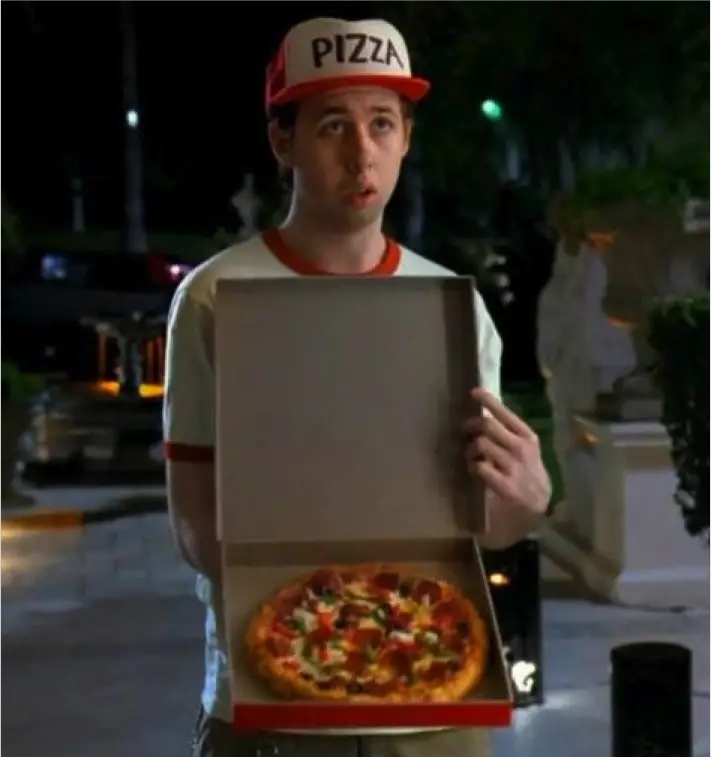
Today, the pizza companies are honing their sleight of hand skills too. Take delivery fees, for example.
My experience has been that most pizza joints rarely mention their delivery fees when quoting their prices over the phone. That’s pretty sneaky if you ask me. Usually, the conversation ends up sounding something like this:
“Okay, sir, you ordered two Pizza Planet pepperoni specials for delivery. That’ll be $30.17.”
“Hold on; the ad says those pizzas are $11 each. I know taxes are high here, but they’re not that high.”
“Well, sir, that total includes a $5 delivery charge.”
“Whoa! Five dollars? Say, your last name wouldn’t happen to be Copperfield, would it?”
“No, sir. Why do you ask?”
“Is that you, Fred? Why on earth are you moonlighting at Pizza Planet?”
“Who’s Fred, sir?”
“Oh, never mind.”
Okay, the part of the conversation where I talk about Fred is a stretch, but you get my drift.
Delivery charges are illusory in other ways. Ironically, they don’t always go directly to the driver. Instead, most – if not all – of that money is typically used to boost the bottom line by offsetting business expenses like the cost of ingredients and employee wages.
It turns out that the major pizza chains began dabbling with delivery fees in select areas shortly after the turn of this century. Back then, Pizza Hut’s delivery charges were typically 50 cents, while Papa John’s and Domino’s hovered around a buck.
However, those fees have increased dramatically since then – especially when compared to the inflation rate over the same period.
Where I live, Papa John’s was levying a $5.50 fee for delivery in 2025, while my neighborhood Domino’s was charging $6 to bring their pies to the door. Meanwhile, the local Pizza Hut is now imposing a $7 fee for all deliveries – that’s 14 times more than they were charging back in 2002.
Out of curiosity, I surveyed two other local pizzerias to see what they were charging for delivery in 2025. Round Table tacks on an additional $5, and an independent joint down the street charges $6.
If you ask me, the most likely reason why pizza delivery fees continue to outpace inflation is that they provide a subtle way of disguising price increases. That monetary legerdemain allows pizzerias to painlessly raise prices while continuing to advertise pies at seemingly bargain rates.
By the way, in case you’re wondering, those pizza delivery charges only became permanent and more widespread once it was apparent to the major pizza chains that they wouldn’t result in an appreciable loss of customers.
Of course, with all the hocus pocus going on, it’s uncertain exactly how many people realized that they were even being charged a delivery fee in the first place. But that really doesn’t matter now. We’ve got nobody to blame but ourselves.
Unfortunately, because we didn’t balk when we had the chance, pizza delivery charges are almost certainly here to stay.
In fact, they’re so firmly entrenched in the market now, I suspect even David Copperfield couldn’t make them disappear.
Photo Credit: DiGiorno
The post Outrageous Pizza Delivery Fees Are Here to Stay (and It’s Your Fault) appeared first on Len Penzo dot Com.