
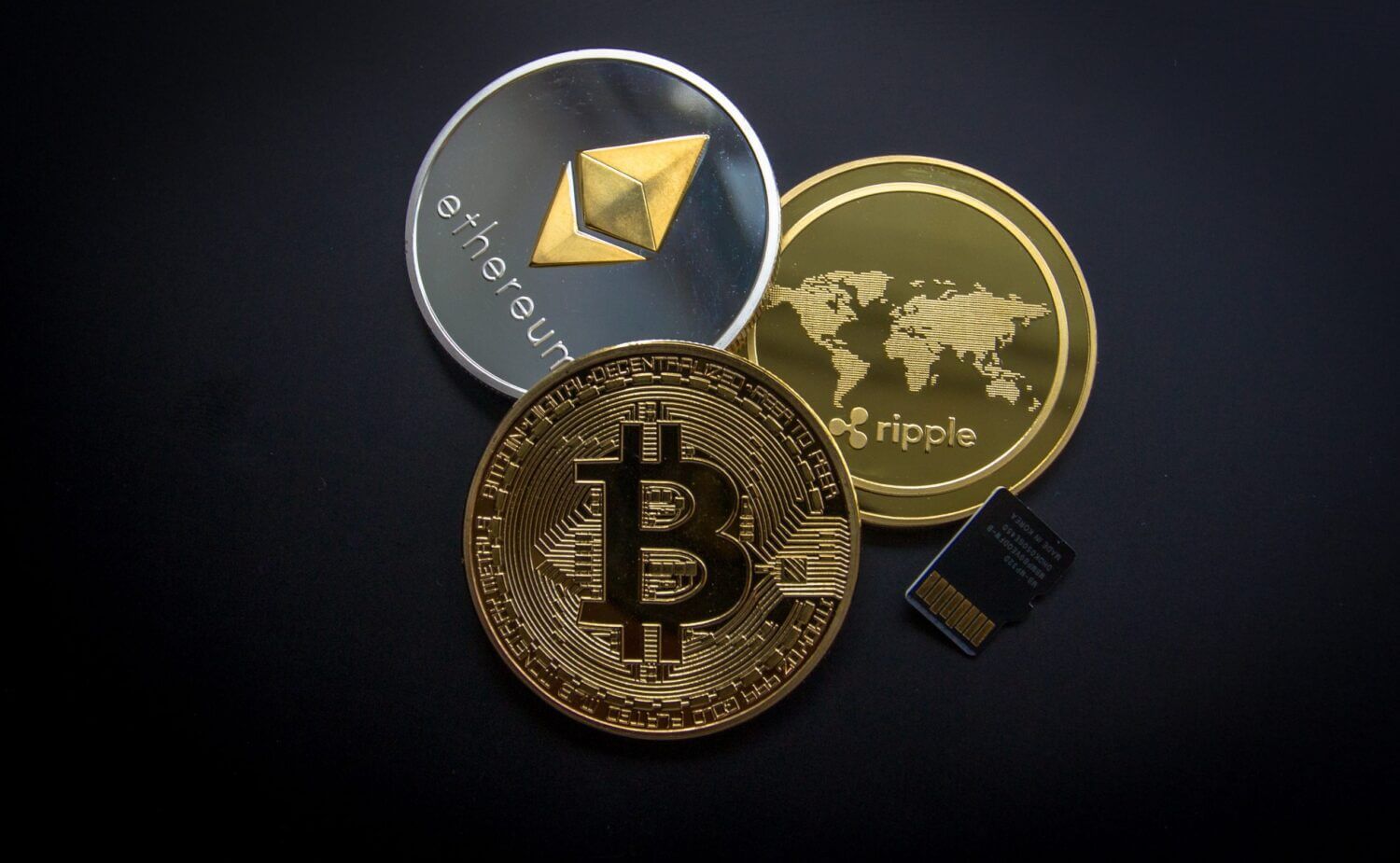
Gone are the days when crypto investing was restricted to just die-hard enthusiasts. Today, you can buy and sell crypto in several modes—including directly or through exchange-traded funds (ETFs)—as easily as you would buy stocks.
Bitcoin is now considered a mainstream asset offered and sometimes promoted by household investment names such as Fidelity and BlackRock. It’s hard to believe, but the U.S. may soon hold bitcoin and other cryptocurrencies as a strategic reserve asset because the Trump administration sees crypto as an important part of the future of finance.
But how exactly do you buy and sell bitcoin and crypto in Canada? Do crypto ETFs actually hold crypto? Is crypto eligible for registered accounts? Let’s look at these questions and more.
Also read
The best crypto platforms and apps
We’ve ranked the best crypto exchanges in Canada.
Option 1: Buying crypto directly from a crypto exchange/platform
The most direct way to get exposure to crypto is to buy BTC, ETH or other cryptocurrencies from a crypto exchange. A crypto exchange, also called a crypto platform or app, works in many ways like a stock exchange. It’s where you buy and sell BTC and other cryptocurrencies.
You can set either market or limit order:
- Market orders get filled immediately during trading hours if the cryptocurrency you’re buying or selling is liquid. This is because you’re agreeing to buy or sell at the prevailing market price.
- Limit orders are for trades you want to make only at a certain predetermined price. You may have to wait until there is a buyer or seller who agrees to your price.
Make sure you’re getting your crypto from an exchange that’s registered (meaning that it’s authorized to do business in Canada) by the Canadian Securities Administrators (CSA). Here are the top five platforms on MoneySense’s list of the best crypto exchanges in Canada. (Use your finger or mouse to scroll to the right.)
| Platform | Score | Coins | Advanced tools | Trading fees | Support |
|---|---|---|---|---|---|
| Coinbase | 21 | 248+ | Yes | 0%–0.6% | Phone, email |
| Kraken | 20.5 | 240+ | Yes | 0%–0.4% | Chat, email |
| NDAX | 20 | 46+ | Yes | 0.20% | Phone, chat |
| Netcoins | 20 | 40+ | No | 0.50% | Phone email |
| Wealthsimple | 19 | 66+ | No | 0.5%–2% | Email, chat, phone |
Once you buy the crypto, you can leave it on the exchange—in which case it is kept under your account but in the custody of the exchange—or you can transfer it into a crypto wallet.
Crypto stored in a wallet is entirely yours and its safekeeping is your responsibility. Broadly speaking, there are two types of wallets. A hot wallet is always connected to the internet, and a cold wallet is one that can be disconnected from the internet. Cold wallets are less convenient, but they’re also less susceptible to online hacks.
Here are some of the most popular crypto wallets:
| Wallet name | Hot or cold | Crypto assets supported | Cold storage supported | Staking/DeFi | Launched |
|---|---|---|---|---|---|
| Zengo | Hot | 380+ | Yes | Yes | 2019 |
| Crypto.com Onchain | Hot | 1,000+ | Yes | Yes | 2020 |
| Guarda | Hot | 300+ | Yes | Yes | 2017 |
| Exodus | Hot | 250+ | Yes | Yes | 2016 |
| Trust Wallet | Hot | 10M+ | Yes | Yes | 2017 |
| Coinbase Wallet | Hot | 5,500+ | Yes | Yes | 2018 |
| MetaMask | Hot | 650,000+ | Yes | Yes | 2016 |
| Ledger | Cold | 5,500+ | Yes | Yes | 2016 |
| Trezor | Cold | 1,000+ | Yes | Yes | 2014 |
Option 2: Buying crypto ETFs
Canada is a leader in crypto ETFs, having been the first country to launch spot bitcoin, ethereum, and solana (SOL) ETFs. Instead of buying and managing the crypto yourself, you could buy shares of an ETF that invests in crypto.
There are three types of crypto ETFs:
- Spot crypto ETFs: These ETFs invest in the underlying crypto asset. There are several spot crypto ETFs in Canada, holding bitcoin, ethereum, both bitcoin and ethereum, or solana. See the full list of spot crypto ETFs in Canada.
- Levered crypto ETFs: In addition to investing in BTC and/or ETH, levered ETFs use financial instruments known as derivatives to potentially amplify the return of the underlying cryptocurrency. In Canada, levered crypto ETFs are fairly new, and they offer 1.25 times the return of the underlying crypto. For example, if BTC rises (or falls) 1% during a trading day, the levered ETF may rise (or fall) 1.25%. Read more about the launch of levered crypto ETFs.
- Multi-asset ETFs that include an allocation to crypto: For Canadian investors who want to limit their crypto allocation to a small percentage of their overall portfolio, an all-in-one ETF may be a good option. These ETFs, which are available for investors of various risk profiles, invest a significant portion of their assets in stocks and/or bonds, with a small allocation of up to 3% in BTC. As of now, only Fidelity offers these ETFs. There are four all-in-one ETF options that include BTC.
| Fidelity All-in-One ETFs | Conservative | Balanced | Growth | Equity |
|---|---|---|---|---|
| Risk classification | Low to medium | Low to medium | Medium | Medium |
| Ticker | FCNS | FBAL | FGRO | FEQT |
| Global equity | 40% | 59% | 82% | 97% |
| Global fixed income | 59% | 39% | 15% | 0% |
| Cryptocurrencies | 1% | 2% | 3% | 3% |
Option 3: Buying shares or ETFs of publicly traded blockchain or crypto-themed companies
If you want investment exposure to crypto but don’t want to hold it either directly or through an ETF, then you could consider buying shares of companies active in the blockchain or crypto sector.
Instead of investing in an underlying crypto asset like BTC or ETH, you would own shares of companies that stand to gain if the crypto industry grows. Such companies trade on Canadian and U.S. exchanges and are accessible to Canadian investors.
Here’s a list of some publicly traded companies in the blockchain/crypto sector available in Canada.
| Company name | Ticker | Exchange | Subsector |
|---|---|---|---|
| Galaxy Digital Holdings Ltd. | GLXY | TSE | Asset management |
| Core Scientific Inc. | CORZ | Nasdaq | Mining and digital infrastructure |
| Riot Platforms Inc. (previously Riot Blockchain Inc.) | RIOT | Nasdaq | Mining and digital infrastructure |
| Coinbase Global Inc. | COIN | Nasdaq | Crypto exchange |
| Strategy (formerly MicroStrategy Inc.) | MSTR | Nasdaq | Bitcoin treasury |
| Marathon Digital Holdings | MARA | Nasdaq | Mining and blockchain infrastructure |
| Applied Digital Corporation. | APLD | Nasdaq | Enterprise blockchain services |
| Bitfarms Ltd. | BITF | TSE | Crypto mining |
| Hut 8 Corp | HUT | TSE | Crypto mining |
| Cleanspark | CLSK | Nasdaq | Crypto mining |
If you want greater diversification, you could consider blockchain or crypto-themed ETFs. These are equity ETFs that invest in the stocks of publicly listed companies in the blockchain or crypto sector. The table below has examples of these ETFs that are accessible to Canadian investors. (Use your finger or mouse to scroll to the right.)
| ETF name | Global X Blockchain ETF | CI Galaxy Blockchain Index ETF | Bitwise Crypto Industries Innovators ETF | VanEck Digital Transformation ETF | Schwab Crypto Thematic ETF | First Trust SkyBridge Crypto Industry & Digital Economy ETF | iShares Blockchain and Tech ETF |
|---|---|---|---|---|---|---|---|
| Ticker symbol | BKCH | CBCX | BITQ | DAPP | STCE | CRPT | IBLC |
| Expense ratio | 0.5% | 0.59% | 0.85% | 0.51% | 0.3% | 0.85% | 0.47% |
| Assets under management | USD$166.38 million | $4.57 million | USD$208.57 million | USD$214.2 million | USD$117.81 million | USD$131.58 million | USD$36.60 million |
| Inception date | July 12, 2021 | April 28, 2022 | May 11, 2021 | April 12, 2021 | Aug. 4, 2022 | Sept. 20, 2021 | April 25, 2022 |
The best way to hold crypto in Canada depends on you
In investing, one size does not fit all. The table below lists the pros and cons of each option so that you can decide what works best for you.
| Investment option | Pros | Cons |
|---|---|---|
| Buying crypto directly from an exchange | • Direct exposure to cryptocurrencies
• Flexibility in choosing from various coins • No fund management fees |
• Have to do all the investment work yourself
• Responsibility for securing private keys (if transferring to a wallet) • Exposure to exchange security risks • Not eligible for registered accounts like RRSPs and TFSAs |
| Buying crypto ETFs | • Regulated by securities regulators
• Eliminates the need for managing wallets and private keys • Options for spot, levered or multi-asset ETFs for tailored exposure • Investment work is outsourced to the fund manager • Eligible for registered accounts like RRSP and TFSA |
• Currently limited to three cryptocurrencies, BTC, ETH, and SOL.
• Levered ETFs can amplify losses • Might not perfectly track the price of the underlying crypto asset • Fund management fees (expense ratio) |
| Buying shares/ETFs of crypto-themed companies | • Indirect exposure to the crypto sector without holding crypto directly
• Benefits from traditional market regulation • Diversification through broader business segments (mining, asset management, infrastructure, etc.) • If buying stocks, no fund management fee • Eligible for registered accounts like RRSP and TFSA |
• Performance may not correlate directly with cryptocurrency price movements
• Subject to stock-market and company-specific risk factors • Companies do not track the price of an underlying crypto asset • If buying ETFs, you must pay fund management fees (expense ratio) |
Canadians investors who are new to crypto may want to dip their toes in the sector before diving in. It’s common for conservative investors and those trying crypto investing to limit the initial investment in crypto to 1% to 5% of a total portfolio.
Experienced investors with a high risk tolerance might consider extending this to 10%—but anything beyond that is not for the faint-hearted.
Crypto is a speculative asset class prone to dramatic price swings, both up and down. Only invest if it’s aligned with your investment goal, time horizon, and risk profile, and invest only as much money as you’re willing to lose.
Investing in BTC, ETH and other crypto assets involves additional risks, too, including regulatory and technological risks. Unfortunately, the space is also riddled with scams and frauds, such as fake crypto platforms and pump-and-dump schemes, so be cautious about how you invest.
Newsletter
Get free MoneySense financial tips, news & advice in your inbox.
Read more about crypto:
- Bitcoin or ethereum: which is the best crypto to buy in 2025?
- Has the bitcoin bubble burst?
- Donald Trump’s new meme coin: $Trump
- What you should know about cryptocurrency tax in Canada
The post How to buy crypto in Canada appeared first on MoneySense.