
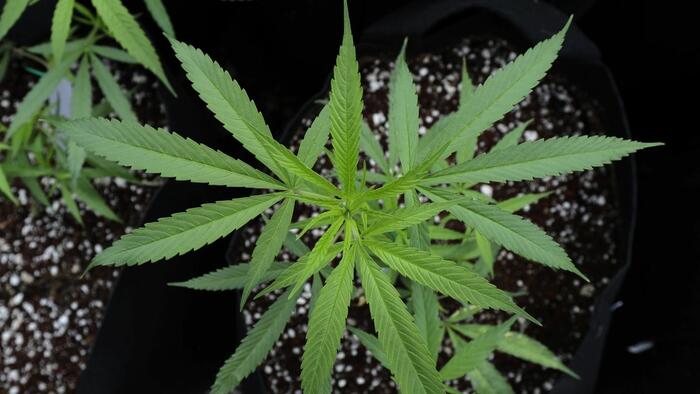
From Whiskey To Weed: A Second Amendment Fight
Authored by John R. Lott Jr. & Laura Lott via RealClearPolitics,
Are regular marijuana users the modern equivalent of “habitual drunkards” at the Founding? What about someone who regularly takes a sleep gummy? In oral arguments before the Supreme Court today in United States v. Hemani, the federal government argues that they are the same.
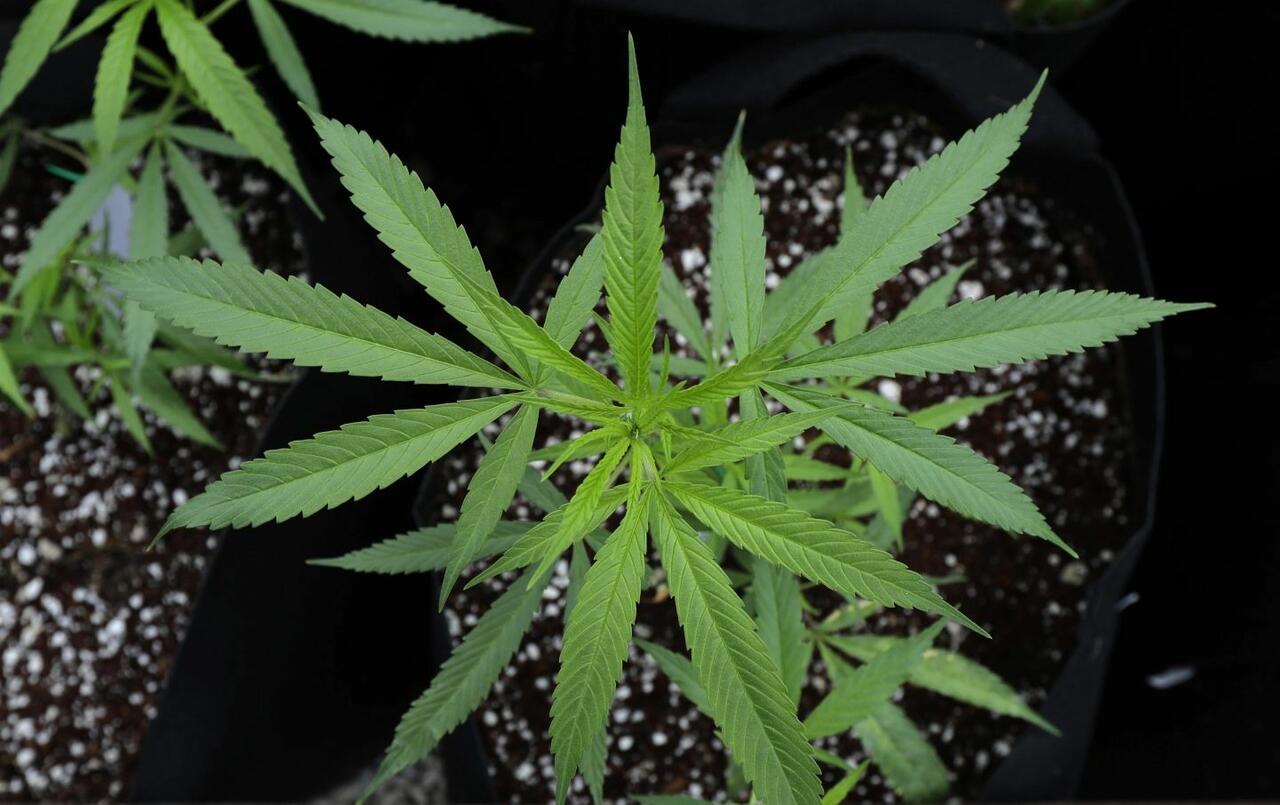
In August 2022, FBI agents searched Ali Danial Hemani’s home and found a Glock 9mm pistol, 2.1 ounces of marijuana, and 1.7 ounces of cocaine. Hemani told agents that he used marijuana roughly every other day.
The case could have far-ranging implications as 40 states now allow medical marijuana and 24 states, the District of Columbia, and two territories allow recreational use, and it carries major practical consequences for millions of Americans – including many gun owners. In 2022, about 18 million Americans reported using marijuana daily or near-daily, and 62 million said they had used it at least once in the past year.
As of 2020, 3.5 million people are enrolled as medical cannabis patients to help with everything from chronic pain, chemotherapy-induced nausea and vomiting to multiple sclerosis and certain forms of epilepsy. The government classifies all “regular” marijuana users the same – regardless of why they use it – and bans them from owning guns, so the decision will also affect them.
“The Supreme Court must decide whether to strip even medical marijuana users of their right to protect themselves and their families or follow the government’s claim that anyone who regularly uses marijuana poses a danger to others,” David Mustard, a distinguished professor at the University of Georgia who extensively researches crime, told RealClearPolitics.
In its 2022 decision in New York State Rifle & Pistol Association, Inc. v. Bruen, the Supreme Court instructed lower courts that when the meaning of the Second Amendment isn’t clear, they must look to historical laws that were broadly in effect either in 1791, when the Second Amendment was adopted, or possibly in 1868, when the 14th Amendment made it applicable to the states. But there weren’t any laws during those periods that broadly barred people who regularly used alcohol from owning firearms.
The federal government points to historical restrictions on “habitual drunkards” as an analogue. The government argues that in early American history lawmakers barred people from carrying guns while they were intoxicated. It also cited what it called a “highly robust body of much harsher founding-era restrictions” on groups analogous to “habitual drug users,” specifically laws targeting “habitual drunkards” based on the belief that they were more likely to commit crimes or act violently.
According to the government, early American legislatures punished habitual drunkards far more severely than those who were drunk in public on isolated occasions: Habitual offenders faced jail time or confinement in a workhouse, while someone drunk in public typically received only a small fine or a few hours in the stocks. Authorities “committed drunkards to lunatic asylums, and subjected drunkards to surety laws backed by threat of jail.”
Hemani’s lawyers responded in their brief by rejecting that comparison as “far afield.” They argue that historical limits on the gun rights of habitual drunkards did not apply to people who merely consumed alcohol regularly, but instead “only those who habitually abused alcohol to the point of frequent intoxication.” These were people who engage in public disruption, disorderly conduct, or dangerous behavior (e.g., criminal negligence). Indeed, Hemani’s lawyers contend that labeling everyone who regularly drank alcohol a “drunkard” would have struck early Americans as anomalous and would have classified a significant share of the population as drunkards.
In 1790, drinking-age Americans consumed an average of about 5.8 gallons of pure (absolute) alcohol per year. That is the equivalent of drinking 3.4 twelve-ounces glasses of 5% alcohol beer every day. In terms of wine, it would be equal to 3.4 five-ounce glasses of 12% alcohol every day.
This is far higher than what Americans drink these days. The National Institute on Alcohol Abuse and Alcoholism estimates that the per capita pure alcohol consumption was about 2.5 gallons per person in 2022 – 57% less than in 1790.
The federal government argues in its brief that founding-era laws restricted the rights of “habitual drunkards,” in terms of vagrancy, through civil commitments, or with surety laws – laws that allowed magistrates to compel certain persons who posed a risk of future misbehavior to post bond.
Hemani lawyers respond that this argument has serious problems. None of the founding-era laws imposed an outright ban on gun possession. Authorities did not target people simply because they drank heavily – by modern standards, most people drank heavily at the time. Instead, courts required individuals to post bonds only when they became so intoxicated that they regularly posed a danger to others.
Alcohol also produces much stronger impairment than marijuana and can, in some cases, increase aggression. Marijuana, by contrast, typically reduces aggression. Regular marijuana users today certainly don’t pose more of a danger than regular alcohol users in the 1790s.
In addition, the Supreme Court’s Bruen decision noted that the historical tradition had to be widespread. But as Clayton Cramer, a historian whose work is frequently cited by both federal and state courts, told RealClearPolitics:
Massachusetts did not adopt the first Surety law (also known as a Peace Bonds law) until 1836—45 years after the ratification of the Second Amendment. And more importantly, only one state (Virginia) adopted a law in 1847 that applied bonds to “drunkards” who regularly were drunk and deemed dangerous if they possessed weapons.
Surety laws differed from today’s marijuana regulations in another important way: They required due process before forcing someone to post a bond. Under surety laws, a court determined whether an individual had to put up a bond. There was no requirement that people who were drinking a lot had to put up the bond before they had a judicial hearing. By contrast, under marijuana laws, no court decides whether someone is a “regular” user before requiring them to give up their guns. Instead, the law automatically bans all regular users from owning firearms.
Relatedly, Hemani’s lawyers argue that the statute is unconstitutionally vague. The law does not define how frequently someone must use marijuana to qualify as a “regular” user, nor does it specify how recent or substantial that use must be. The government contends that the regular use of marijuana presents sufficient risk to public safety to warrant disarmament under the Second Amendment and that this prohibition is consistent with historical analogues to disarming persons considered dangerous.
Supporters of the challenge argue that the Founding era did not categorically strip individuals of their right to self-defense based solely on alcohol consumption, and they contend that historical evidence does not support treating modern marijuana users – including those who use the drug legally for medical purposes under state law – as analogous to “habitual drunkards.” They say the government’s position would effectively transform otherwise lawful and widespread conduct into a basis for losing the ability to protect yourself and your family, even without individualized evidence of dangerousness.
John R. Lott Jr. is president of the Crime Prevention Research Center. He served as the senior advisor for research and statistics in the Office of Justice Programs and the Office of Legal Policy in the U.S. Department of Justice during 2020-21.
Tyler Durden
Tue, 03/03/2026 – 17:00