
Europe's AI Ambitions Threatened By Soaring Memory Chip Prices
Submitted by Thomas Kolbe
The ongoing boom in artificial intelligence is sending memory chip prices skyrocketing, putting pressure on data center operators. Europe currently lacks a strategy to break free from this price spiral.
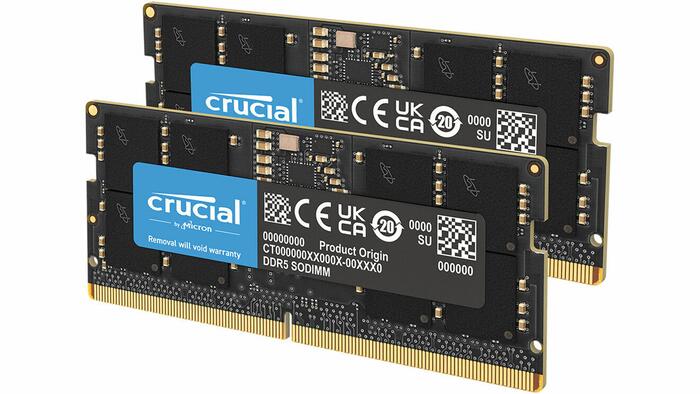
The persistent surge in digitalization, particularly in AI, requires immense data storage capacity and is driving global demand for memory chips. These so-called RAM modules (Random Access Memory) have transformed from classic commodity products into highly specialized, strategic key resources of the new economy.
This strategic battle over memory chips is also reflected these weeks in the struggle for pole position between the United States and China. Just a few weeks ago, the administration of U.S. President Donald Trump granted American chipmaker NVIDIA limited permission to export its chips to China—while simultaneously collecting a 25 percent export levy from the Chinese side.
It is clear that the U.S. will increasingly use chip exports as a geopolitical lever, much like it has already done with LNG deliveries to Europe.
Memory Chips as the Foundation of the Digital Economy
These chips are used in smartphones, data centers, AI applications, cloud solutions, servers, and nearly every industrial production process. Demand for memory chips such as DRAM and NAND Flash has surged massively over the past five years. Combined global revenue for these chips was around $120 billion in 2020—about 25 percent of the overall semiconductor market—and has increased to roughly $176 billion this year.
Worldwide lockdowns in 2020 further accelerated this trend. At the same time, they posed enormous challenges for the global economy in both energy production and memory chip manufacturing.
Europe, in particular, now faces a severe shortage problem as skyrocketing demand pushes chip prices ever higher. A few highly specialized manufacturers, such as Samsung and SK Hynix, are increasingly in the political spotlight. Their enormous pricing power directly affects European data center operators. With such market concentration, prices are rising not linearly, but exponentially, systematically stalling the expansion of European data center capacity.
Exponential Price Pressure
To provide some relief, Samsung announced it would continue producing the soon-to-be-phased-out DDR4 standard chip beyond 2026, before factories fully switch to the new DDR5 generation. The crisis has become so acute that even this outdated technology is being artificially kept alive. The price sensitivity is stark: a 16GB DDR4 chip that previously cost around $20 now exceeds $60—and can be even higher in urgent data center upgrades.
This is not classic monetary inflation, but scarcity-driven price pressure. The crisis could last for years, with no relief in sight—particularly impacting AI and high-performance computing.
European cloud providers and mid-sized data centers face the dilemma of massive price hikes alongside slim margins. High electricity costs and shrinking financial buffers in Europe, especially Germany, exacerbate the issue. Smaller European data center operators are likely to be forced out of business under these conditions.
Europe’s Dilemma
Apple represents an exception. The company relies on highly optimized specialty RAM modules (LPDDR5X) and has strategically secured long-term supply contracts, meaning the current chip supply crisis will hit Apple much later than other providers.
From a European perspective, the situation could hardly be more dramatic. Intel’s planned chip production facility in Germany highlights the dilemma: while it would have little immediate impact on the shortage of specialized memory chips, it exposes the core problem—billion-euro subsidies are insufficient to sustainably build competitive chip manufacturing in Europe. High energy costs and excessive bureaucracy cannot be subsidized away.
Big Goals, Limited Impact
In response, the European Commission launched the European Chips Act in September 2023, a strategic framework aimed at strengthening Europe’s position in the global semiconductor market and reducing dependence on imports from Taiwan, South Korea, the U.S., and China. Europe currently accounts for well under 15 percent of the global chip market. Brussels is following a familiar political pattern: funding programs for startups, SMEs, research institutions, and competence centers to build knowledge, infrastructure, and retain talent.
The EU aims to locate around 20 percent of global chip production within Europe by 2030. For example, €920 million in funding has been mobilized for Infineon in Dresden—the largest semiconductor investment in the company’s history. The goal is to bring not only low-end production but large parts of the value chain to Europe. Public and private investments totaling €43 billion are targeted by 2030.
Intel’s example highlights structural challenges: European policy supports chip production, but creating a dynamic environment for startups, venture capital, and entrepreneurial innovation is left out. Greater reliance on free capital markets, less state intervention, and reduced regulation could make Europe’s technological independence more realistic. Yet, neither Brussels nor Berlin appears ready for such a paradigm shift.
* **
About the author: Thomas Kolbe is a German graduate economist. For over 25 years, he has worked as a journalist and media producer for clients from various industries and business associations. As a publicist, he focuses on economic processes and observes geopolitical events from the perspective of the capital markets. His publications follow a philosophy that focuses on the individual and their right to self-determination.
Tyler Durden
Sun, 01/04/2026 – 10:30