
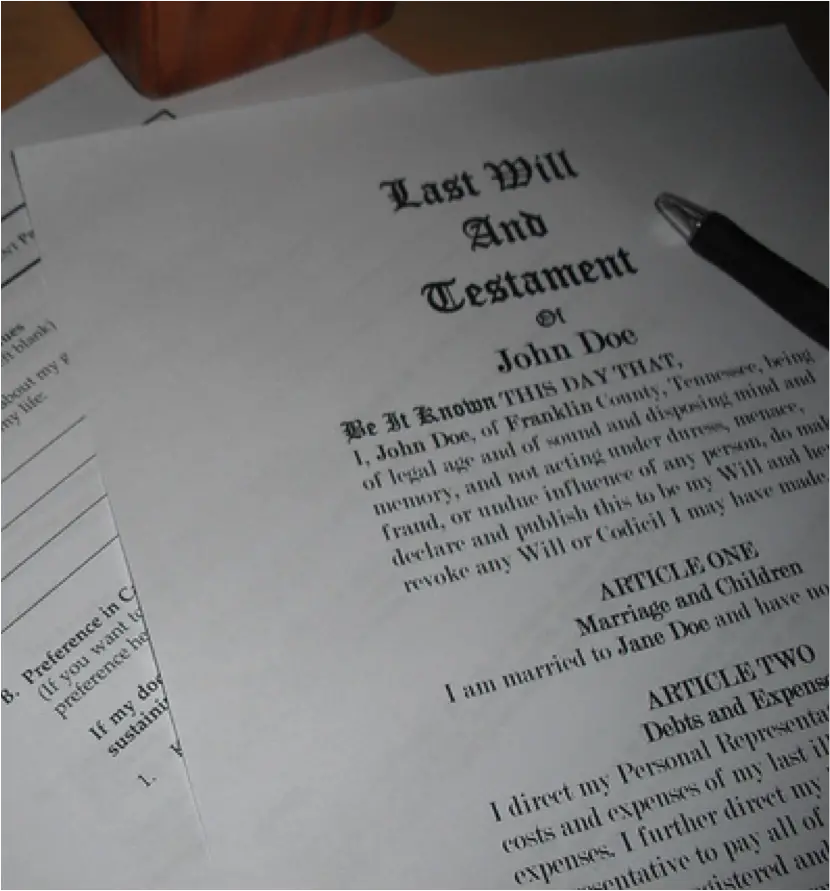
What happens when people die — or are dying — is a subject of intense debate. For you it might be a matter of faith or science. What’s less debatable: if you prepare properly, the people you leave behind will have an easier transition. Several options are available. Which one you select depends upon several factors, including the size of your estate, your heirs and your state of health. With that in mind, here’s a quick guide to wills, trusts and estate planning:
Wondering About Wills?
A will designates what will be done with your assets after you’ve passed. This document has a number of advantages:
- A will is relatively simple to create. In certain states, a handwritten will — also known as a holographic will — is acceptable, although there are strict requirements. For instance, anyone using a holographic will must handwrite it; no computers, typewriters or other assistance are allowed.
- Legal fees are relatively low.
- You can provide for both the care and financial needs of minors and other dependents.
- A court oversees the handling of a will, so you know your intentions will be honored.
Nothing’s perfect, however, including wills. There are certain constraints:
- Wills take effect only upon death. If you want to make provisions for incapacity, you’ll need another document.
- Wills can take a long time to go through probate: months or years, depending upon complexity. The probate court needs notification of assets and liabilities. Heirs and creditors are contacted. Only then can the estate be settled.
- Probate is a public process, so don’t expect secrecy.
- You must go through legal channels in order to properly modify a will.
- If your estate spreads across different states, each locale might require a separate hearing.
A Look at Living Wills
A living will takes effect before you die. It spells out what should happen if you are not capable of making medical decisions for yourself. On the plus side:
- You ensure your wishes are followed if you are unconscious or otherwise out of commission.
- A living will gives you the opportunity to share your choices with loved ones before a crisis.
- A living will can prevent family court battles over your medical treatment because you have already identified protocol.
- Creating a living will can be free. Medical offices, hospitals and assisted livings centers often supply documents at no charge.
Factors to consider include:
- If no one else is aware of your living will, it can’t go into affect. Your family then makes medical decisions for you, even if they conflict with your wishes.
- As you age, your intentions might change. If this happens, modify your living will to reflect your new state of mind.
- Legal requirements for living wills vary by state.
Troubled About Trusts?
By using a living trust, your heirs avoid the hassle — and publicity — of probate court. You appoint a trustee to manage your affairs after you’re gone. Is this the right choice for you?
- Since there’s no probate, your wishes go into effect quickly. Some states have very long, complex processes for handling wills.
- Trusts are private. No outsiders know how you dispose of your estate.
- Having property in several states does not complicate the workings of a trust.
- In addition to directing assets after your death, you can also use a trust to establish an end-of-life directive and identify a guardian if you’re physically or mentally unable to make decisions.
The downside is primarily financial. If you go through a lawyer, a living trust is typically more expensive to create than a will.
Ponder the Power of Attorney
By legally designating a power of attorney, you give someone the ability to make decisions for you if you’re incapacitated. It has distinct benefits:
- The power of attorney isn’t usually a public document. However, if a real estate transaction is involved, the county clerk’s office records the activity. These archives are available to anyone.
- The only people who must see the authorization are those who are affected by its provisions, such as hospital or bank personnel. These individuals will likely expect to keep copies of the form.
Keep in mind, however:
- In most states, you have to legally record the document. Often a notary must authenticate your signature and the date.
- You’re not required to notify your family when you establish a power of attorney — but that can be a big mistake. If you don’t, you open the door to confusion, disagreements and distrust.
End-of-life scenarios are never pleasant to consider — but it’s important to knuckle down and make decisions. Doing so will provide peace-of-mind that the situation will be handled exactly as you wish. Then you can get back to the business of enjoying life.
Photo Credit: Ken Mayer
The post An Introductory Guide to Wills, Trusts and Estate Planning appeared first on Len Penzo dot Com.