

AI's Next Frontier Is Physical As Humanoid Robots Begin March On Assembly Lines And Beyond
Humanoid robotics is transitioning from prototype to production by late 2026 and into 2027. The market, currently valued at roughly $3 billion, is projected to expand to $40 billion under Barclays' base-case outlook, with upside scenarios reaching $200 billion as physical AI scales across labor-intensive sectors.
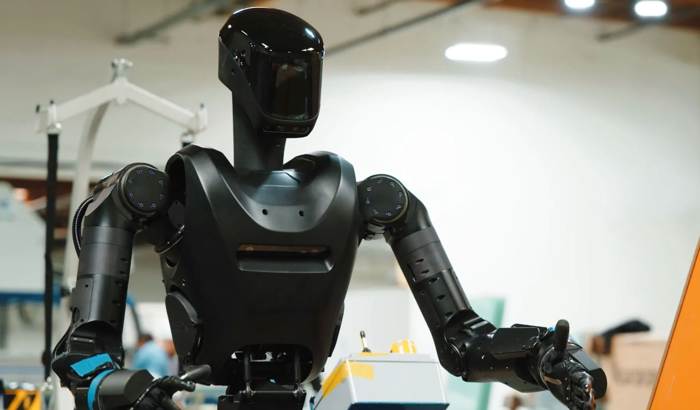
In one of the latest Barclays Eagle Eye newsletters, the firm's internal thematic research for clients highlighted humanoid robotics, with several examples of these bots moving past pilot programs to industrial production lines.
The research note stated:
Industrial robots have been part of growing automation for half a century, welding car parts, sorting mail, moving packages in warehouses and even flipping burgers in recent years. However, they have been limited in mobility and confined to a narrow set of tasks because they lacked one critical skill: understanding context.
For example, when a humanoid robot was asked to water plants, it could confuse humans with plants. But thanks to recent advances in AI, humanoid robots are now learning to read situations and act accordingly, making them far more scalable than fleets of specialized machines.
A robot equipped with arms, legs and visual reasoning can adapt and perform multiple tasks safely, replacing a dozen single-task robots. German carmaker BMW has put humanoid robots on the line in its Spartanburg plant, where they perform multiple precision-required tasks, such as loading sheet-metal parts into welding fixtures.
. . .
The cost for one unit has collapsed from about $3 million a decade ago to $100,000 today.
The plunge in production costs for these humanoid robots suggests that, as the global population ages, urbanization continues, and worker preferences change, companies will find use cases for these bots to replace low-skilled labor.
As adoption accelerates, Barclays estimates the humanoid robotics market could expand from roughly $3 billion today to as much as $200 billion by 2035. Initial demand is expected to be concentrated in industrial firms, automakers, ports, and warehousing, where labor substitution and productivity gains are most immediate. Humanoids for households will be a story for the early 2030s.
In a separate note, Barclays analyst Zornitsa Todorova recounts the biggest takeaways from her discussion about bots at the World Economic Forum in Davos last month:
The key takeaway from our panel: humanoid robots could generate powerful near-term tailwinds for industrials, not only for companies building the hardware, but also for those looking to deploy these systems across manufacturing, logistics, agriculture, defence and, as the technology matures, healthcare and elderly care.
Beyond manufacturing, logistics, and agriculture, humanoid robots will soon be entering the modern battlefield – like it or not – this trend cannot be stopped.
Some of the leading robotics companies, including Boston Dynamics, Agility Robotics, ANYbotics, Clearpath Robotics, Open Robotics, and Unitree, have already signed an open letter stating that the robotics industry should not be weaponized.
Figure AI CEO Brett Adcock recently told investors, "We will not place humanoids in military or defense applications, nor any roles that require inflicting harm on humans."
This leaves us with Foundation Robotics, a US-based robotics startup developing humanoid robots for industrial and military applications. The company has identified a significant gap in defense use cases for humanoids and is training its Phantom MK1 for offensive operations.
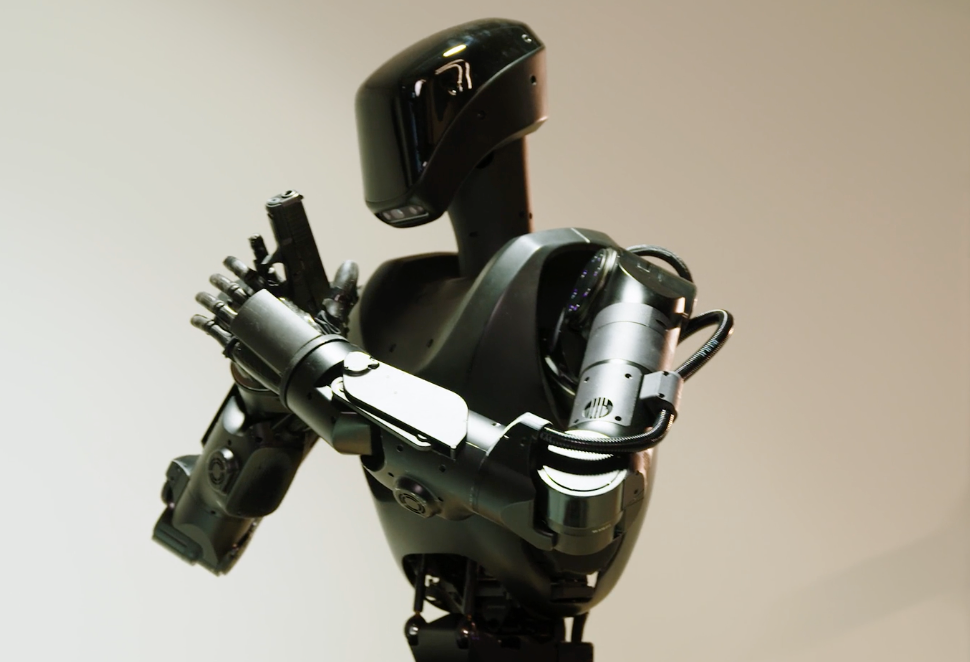
Foundation is positioning itself as a leader in military humanoid robotics. CEO Sankaet Pathak recently confirmed this move in comments to tech blog Humanoids Daily, emphasizing the company's defense-first mindset.
Its philosophy is reinforced by co-founder Mike LeBlanc, who recently said the team designed the Phantom MK1 to enter and breach rooms and other high-risk environments ahead of human operators. As LeBlanc put it, the goal here is simple: do not send a Marine where a robot can go first.
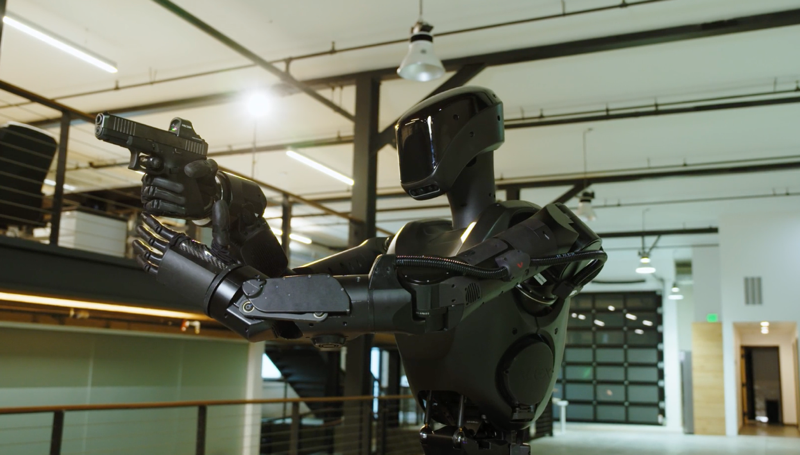
Like it or not, the rest of the world, whether China, Russia, or Ukraine, is already pursuing a dual-use robotics strategy. The rise of humanoid robotics on the modern battlefield is unavoidable.
While many US robotics firms emphasize safeguards and ethical constraints, other countries are rapidly integrating robotics, large language models, FPV drones, and AI-driven systems into warfare. What we are seeing today in Ukraine – on both sides – is a preview of what war in the 2030s may look like, and it is deeply unsettling.
Tyler Durden
Tue, 02/03/2026 – 23:00