
Systemic Risk: A 12-Order Cascading Analysis Of A Zero-Flow Strait Of Hormuz Closure
Authored by Craig Tindale via X:
Executive Summary
The modern world order, having organized itself around efficiency, cost minimization, and logistical precision, has created a machinery of dependence so extreme that the interruption of one narrow corridor can propagate outward into a general crisis of civilization.
What appears at first as a maritime blockade is in fact the exposure of the entire global system as a hierarchy of brittle interdependencies.
Oil and LNG fail as inputs into electricity, fertilizer, shipping, chemicals, mining, manufacturing, and state finance.
As an example, The global polyester chain begins in petrochemicals. A severe disruption to hydrocarbon and petrochemical feedstocks cascades into PTA, MEG, polyester resin, filament, and fabric production, causing acute shortages, price spikes, and factory stoppages across synthetic-heavy apparel segments. The industry does not vanish overnight, but the low-cost, high-volume apparel model starts to break down.
From this follows a chain whose logic is cumulative: fuel inflation becomes fertilizer inflation; fertilizer inflation becomes food inflation; food inflation becomes urban instability, sovereign subsidy exhaustion, and ultimately hunger. In this sequence, food shortages are not a secondary humanitarian issue. They are one of the central political outcomes of the crisis, because modern populations do not experience systemic breakdown first through grand strategy, but through unaffordable bread, intermittent power, empty pharmacies, and possibly the collapse of public order. A globalised Arab Spring.
In this framework, hyperinflation emerges as the social expression of real physical bottlenecks. When energy-importing states are forced to acquire dollarized fuel at any price, when currencies weaken, when fertilizer and transport costs reprice an entire harvest cycle, inflation ceases to be cyclical and becomes coercive.
It enters every household budget and every state ledger at once. The result is the destruction of planning itself: firms cannot quote, governments cannot subsidize, and populations can no longer calculate the future. Under such conditions, credit markets seize up, foreign-exchange reserves drain, sovereign spreads widen, and the boundary between economic crisis and political crisis disappears.
Modern technical systems amplify rather than dampen this disorder. The loss of sour crude becomes a sulphur and sulphuric acid crisis; that chemical crisis becomes a copper and cobalt crisis; the metals crisis becomes a transformer, switchgear, and grid crisis; the grid crisis becomes a semiconductor crisis; and the semiconductor crisis becomes a compute and data-centre crisis.
Thus, the closure of a maritime strait reaches, by entirely material means, into the server rack, the hospital network, the payment system, the electrical substation, and the defence-industrial base. The myth that digital civilization floats above heavy industry is, in this scenario, extinguished. Compute is shown to rest on copper, transformers, stable voltage, LNG, and ships.
For humanity, the systemic risk is therefore total in scope even if uneven in distribution.
The most immediate suffering falls on import-dependent and fiscally weak societies: blackouts, food insecurity, unemployment, debt default, regime stress, and mass unrest. Yet the advanced economies do not escape. They experience industrial contraction, infrastructure delays, AI and semiconductor bottlenecks, strategic stockpiling, and the permanent repricing of security over efficiency. What begins as a supply shock ends as a transformation of the political economy. States abandon the fiction of neutral markets and move toward command allocation, export controls, emergency powers, and militarized trade corridors. Market price gives way to strategic rationing. Globalization does not simply slow; it hardens into armed blocs.
The ultimate conclusion is grim : the terminal danger in this model is not one shortage, nor one recession, nor even one war-risk premium.
It is the transition from a globally integrated commercial order into a world system governed by scarcity, coercion, and administrative triage.
In such a world, hunger, hyperinflation, sovereign failure, technological stagnation, and geopolitical militarization are not separate crises.
They are the normal operating features of a civilization that has discovered, too late, that its efficiency was built on concentrated fragility. The closure of Hormuz, under this analysis, is the event through which the modern world recognizes that its supply chains were never only economic structures, but the hidden constitution of social peace itself.
A multipolar world is a very complicated and dangerous world. As always, be careful what you wish for.
Such is the risk. The whole world will be compelled to support efforts to bring this situation under control immediately. China, the US, and Europe will have to work together.
The political cycle over the coming days and weeks is going to matter like never before.
Here are 10 likely and immediate crises
-
Polyester -> apparel The global polyester chain begins in petrochemical feedstocks. If naphtha, paraxylene, PTA, or MEG are disrupted, polyester fiber, yarn, and fabric output contracts sharply, and synthetic-heavy apparel production starts seizing up. Chain: Petrochemicals -> PTA/MEG -> polyester -> fabric mills -> garment factories
-
Natural gas -> fertilizer -> food The global nitrogen fertilizer chain begins with natural gas. If gas supply is disrupted, ammonia and urea production falls, farm input costs spike, and food systems come under pressure within a single planting cycle. Chain: Natural gas -> ammonia -> urea -> crop yields -> food prices
-
Sour crude / sulfur -> sulfuric acid -> copper The copper and cobalt extraction chain depends on sulfuric acid, which in turn depends heavily on sulfur recovered from sour hydrocarbons and smelting. If sulfur or acid supply is disrupted, leaching operations stall and electrification inputs tighten fast. Chain: Sour crude/sulfur -> sulfuric acid -> SX-EW/HPAL -> copper/cobalt -> grids and EVs
-
Propylene -> polypropylene -> medical and packaging The polypropylene chain begins in petrochemicals. If propylene supply is disrupted, packaging, medical disposables, and automotive plastics face shortages, forcing manufacturers to ration output or redesign products. Chain: Propylene -> polypropylene resin -> molded parts/films -> hospitals, food packaging, autos
-
Salt + power -> chlorine / caustic soda -> water treatment The chlor-alkali chain begins with salt and electricity. If that system is disrupted, chlorine and caustic soda output drops, putting water treatment, sanitation, PVC, and pulp processing under immediate stress. Chain: Salt + electricity -> chlorine/caustic soda -> water treatment/PVC/paper
-
Natural rubber + synthetic rubber -> tires -> freight The tire industry begins with natural and synthetic rubber. If either is severely disrupted, tire production contracts, replacement cycles stretch, and trucking fleets start operating under maintenance and logistics constraints. Chain: Rubber feedstocks -> tires -> trucking fleets -> freight movement -> retail supply
-
Iron ore + metallurgical coal -> steel -> construction and machinery The steel chain begins with iron ore and metallurgical coal. If either feedstock is constrained, steel mills cut output, and construction, auto manufacturing, shipbuilding, and heavy machinery start absorbing delays and cost shocks. Chain: Iron ore + met coal -> steel -> beams, sheet, machinery -> construction/autos/industry
-
Bauxite + alumina + cheap power -> aluminum -> transport and packaging The aluminum chain begins with bauxite, alumina refining, and very large amounts of electricity. If any of those are disrupted, smelting capacity drops and packaging, aerospace, transport, and power transmission all get hit. Chain: Bauxite -> alumina -> aluminum smelting -> cans, aircraft, cable, vehicle parts
-
Soda ash + natural gas -> glass -> buildings, autos, solar The flat glass chain depends on soda ash, silica, and high-temperature continuous furnaces fed by stable energy. If those inputs are disrupted, glass production cannot be easily paused and restarted, and shortages hit construction, autos, and solar manufacturing. Chain: Soda ash + silica + gas -> float glass -> windows, windshields, solar panels
-
High-purity gases and chemicals -> semiconductors -> electronics and autos The semiconductor chain begins with ultra-pure gases, photoresists, specialty chemicals, and stable power. If those inputs are disrupted, chip yields collapse, lead times extend, and electronics, autos, telecom, and defense manufacturing start choking on shortages. Chain: Neon/photoresists/ultra-pure chemicals + stable power -> wafers -> chips -> downstream manufacturing
Section 1: The Master Cascade, An Institutional Matrix
The systematic rationalization of global supply chains has constructed an extraordinary vulnerability.
The following matrix outlines the chronological and mechanical breakdown of the global system, from initial logistical paralysis to the ultimate civilizational redesign.
Caution – Remember, these are just my own thoughts and don't represent certainty. It's an extrapolation of what could happen, not what will. That said, it is a serious risk warning
-
Order 1: Maritime Flow Interruption (0–14 Days)The mechanism is an logistical gridlock of approximately 20.9M bpd in liquids and 80 mtpa in LNG, operating against maximized bypass pipelines. The binding bottlenecks are the Saudi Petroline and UAE Habshan capacity limits, which offer a maximum of 2.8M to 3.1M bpd in spare diversion, alongside severe VLCC availability constraints. The leading indicators of this phase are prompt-month Brent crude backwardation, VLCC ton-mile rates exceeding $423k/day, and the instantaneous cancellation of P&I War Risk Insurance.
-
Order 2: Refining & Industrial Chemicals (2–6 Weeks)The mechanism relies on the starvation of sour crude, yielding an immediate, unmitigable global deficit in elemental sulphur by-production. The physical bottlenecks are strict toxic transport limits, local refinery storage capacities, and concurrent Russian export bans. The leading indicators are domestic Chinese sulphuric acid pricing breaching 1000 yuan/ton and the abrupt halt of Qatari sulphur exports, removing 3.8M tpa from the market.
-
Order 3: Mining & Metals Extraction (1–3 Months)The mechanism is a profound sulphuric acid famine that forces the halt of Solvent Extraction and Electrowinning (SX-EW) and High-Pressure Acid Leaching (HPAL) operations for copper and cobalt. The bottlenecks manifest in shallow regional acid inventory buffers and Zambian cross-border rail constraints. Leading indicators include formal force majeures declared across the DRC and Zambian copper belts, with spot acid prices in Kolwezi surging past $700/tonne.
-
Order 4: Grids & Power Hardware (3–12 Months)The mechanism dictates that the copper deficit exacerbates an already chronic shortage of Large Power Transformers (LPTs) and high-voltage switchgear. The bottlenecks are the highly concentrated supply of GOES (Grain-Oriented Electrical Steel), inflexible vapor-phase drying limits, and extreme OEM lead times extending to 120–210 weeks. Leading indicators are Siemens Energy and Hitachi order backlogs swelling beyond €146B, accompanied by a surging Federal Reserve Transformer Price Index.
-
Order 5: Semiconductor Supply Chains (11–30 Days)The mechanism involves Taiwanese LNG starvation triggering mandatory grid rationing, exposing fabrication equipment to catastrophic voltage sags. The bottlenecks are defined by Taiwan's statutory 11-day LNG reserve limit, strict SEMI F47 tool tolerance limits, and 28-week lead times for ABF substrates. Leading indicators include Taipower's percent operating reserve (POR) collapsing, skyrocketing TSMC wafer scrap rates, and extreme spot LNG premiums.
-
Order 6: Compute & Data Centers (6–18 Months)The mechanism is the violent collision of silicon supply constraints with transformer unavailability, freezing GW-scale expansions entirely. The bottlenecks are a stagnant 2,600 GW US interconnection queue and interconnection wait times extending up to 7 years in PJM and Northern Virginia. Leading indicators are the public delays of AWS and NVIDIA capex deployments, alongside the structural pausing and cancellation of hyperscaler contracts.
-
Order 7: Capital Markets & Credit (1–6 Months)The mechanism centers on material cost inflation driving severe margin compression, causing high-yield industrials to reprice violently. The bottlenecks are heavy industrial balance sheet leverage and the rapid draining of Emerging Market FX reserves required to secure dollarized energy. Leading indicators include Siemens Energy credit spreads widening past 300 bps, the KRW/USD exchange rate breaching 1460, and the INR hitting record lows.
-
Order 8: State Response Layer (13–90 Days)The mechanism involves sovereign authorities enacting SPR drawdowns and utilizing the DPA, only to be subordinated by uncompromising pipe and cavern physics. The bottlenecks are the SPR's maximum daily hydraulic drawdown limit of 4.4M bpd and a strict 13-day lag for physical market entry. Leading indicators are US DOE spot-price indexed solicitation data and the issuance of federal mandates via the Defense Production Act.
-
Order 9: Trade Architecture (1–3 Years)The mechanism is the multi-year restructuring of maritime supply lines, marked by the acceleration of Petroyuan usage as dollar liquidity drains from the system. The bottlenecks are absolute global shipbuilding capacity limits, with Asian yards fully booked into 2029, and the constraints of an aging VLCC fleet. Leading indicators are surging non-dollar energy settlement volumes, newbuild VLCC orders, and shipyard utilization rates.
-
Order 10: Social Stability (6–12 Months)The mechanism traces extreme energy and fertilizer (ammonia/urea) inflation directly into structural food crises across Emerging Markets. The bottlenecks are the exhaustion of sovereign fiscal space and heavily import-reliant energy profiles in states like Egypt, Turkey, and Pakistan. Leading indicators include sovereign CDS spreads rupturing past 600 bps, formal EM debt defaults, and emergency IMF Extended Fund Facility interventions.
-
Order 11: Industrial Structure Shifts (2–5 Years)The mechanism is the forced substitution of aluminum for copper, which immediately strikes the physical and thermodynamic limits of engineering. The bottlenecks are aluminum's inferior 61% IACS conductivity and its high thermal expansion and creep in dense grid environments and EV motors. Leading indicators are mass corporate hardware redesign announcements and shifting structural Cu/Al price ratios.
-
Order 12: Civilizational Redesign (5+ Years)The mechanism represents the terminal shift: the doctrine of economic efficiency is permanently subordinated to the bureaucratic mandate of resource security, resulting in industrial autarky. The bottlenecks are the limits of capital allocation, the physical militarization of supply chains, and the massive inflationary costs of near-shoring. Leading indicators are sweeping structural tariff escalations and massive strategic mineral stockpiling FIDs, such as the US Project Vault.
Section 2: The 12-Order Deep Dive
Order 1: Maritime Flow Interruption
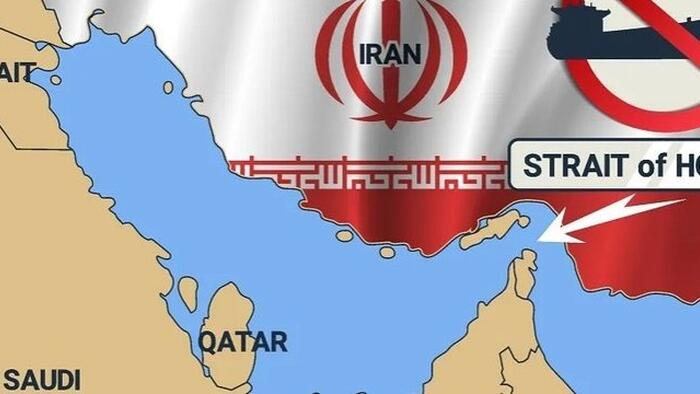
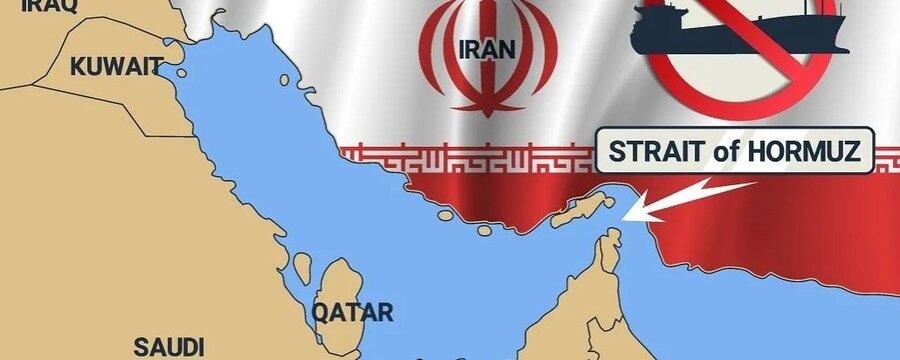
The Strait of Hormuz stands as the ultimate geographical monopoly over the global hydrocarbon economy. Its spatial reality, measuring a mere 21 miles wide at its narrowest point, with functional shipping lanes strictly demarcated by a two-mile buffer zone, constructs an unparalleled architecture of systemic vulnerability. A zero-flow closure instantaneously strands between 20.7 and 20.9 million barrels per day (bpd) of crude oil, condensate, and refined petroleum products. This volume dictates the terms of global trade, representing over 20% of global liquid consumption and more than 25% of the total seaborne oil market. Concurrently, a staggering 10.5 to 11.4 billion cubic feet per day (Bcf/d) of Liquefied Natural Gas (LNG), equating to roughly 80 million tonnes per annum (mtpa), or 20% of the entire global LNG trade, is physically trapped within the Persian Gulf. Qatar alone is responsible for 9.3 Bcf/d of this trapped volume, with an overwhelming 83% to 84% of these cargoes historically destined to feed the energy-starved industrial machines of Japan, South Korea, China, and Taiwan.
The prevailing market assumption that regional pipeline infrastructure offers salvation is mathematically false. The rationalization of bypass routes reveals severe limitations:
-
Saudi East-West Petroline: Boasting a nameplate capacity of 5.0 million bpd, this route from Abqaiq to the Red Sea port of Yanbu offers only an estimated ~2.4 million bpd of functional spare capacity. Crucially, the system cannot simultaneously fill buffer storage and maximize loading rates for VLCCs.
-
UAE Habshan-Fujairah Pipeline: Routing from Abu Dhabi to the Gulf of Oman, its 1.5 million bpd nameplate capacity is heavily constrained by existing utilization, providing a mere 0.4 to 0.7 million bpd of functional relief.
Combined, this optimal pipeline diversion achieves only 2.8 to 3.1 million bpd, guaranteeing an absolute, unmitigated physical supply deficit exceeding 17.5 million bpd of liquids globally.
The immediate bureaucratic reaction of the market is a hyper-spike in the Very Large Crude Carrier (VLCC) ton-mile multiplier. Protection and Indemnity (P&I) Clubs, the institutional gatekeepers covering 90% of global commercial tonnage, issue standar