
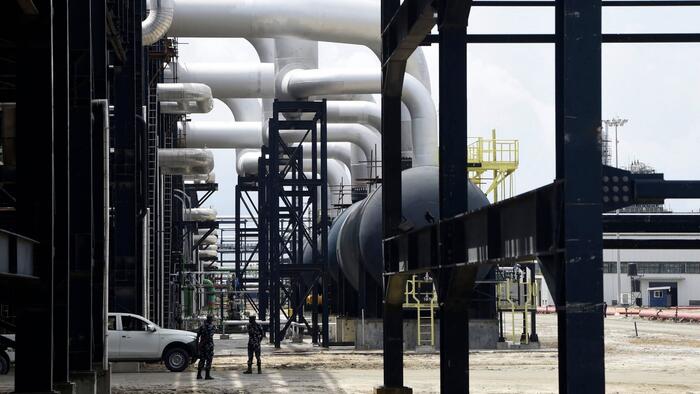
Africa's Pipeline Rejects Climate Dogma And Foreign Control
Authored by Vijay Jayaraj via American Greatness,
Political powers in the United Nations and European Union have spent decades lecturing Africa on climate “virtue.” Net-zero pledges, renewable targets, ESG frameworks, and more make up the ever-growing list of prescriptions for “healing the planet.”
Having already industrialized through the use of fossil fuels and enjoying full bellies, stable power grids, and unprecedented luxury, the so-called elite of the developed world present a “low-carbon” economy as morally superior. African nations are pressured to use “sustainable” energy sources—mostly wind and solar technologies—to effectively prevent the development of the Dark Continent’s rich deposits of coal, oil, and natural gas and engender dependence on foreign governments.
Now, when an African entrepreneur moves decisively to break the chains of this dependency, the climate crusaders are revealed not as guardians of the planet, but as guardians of geopolitical control.
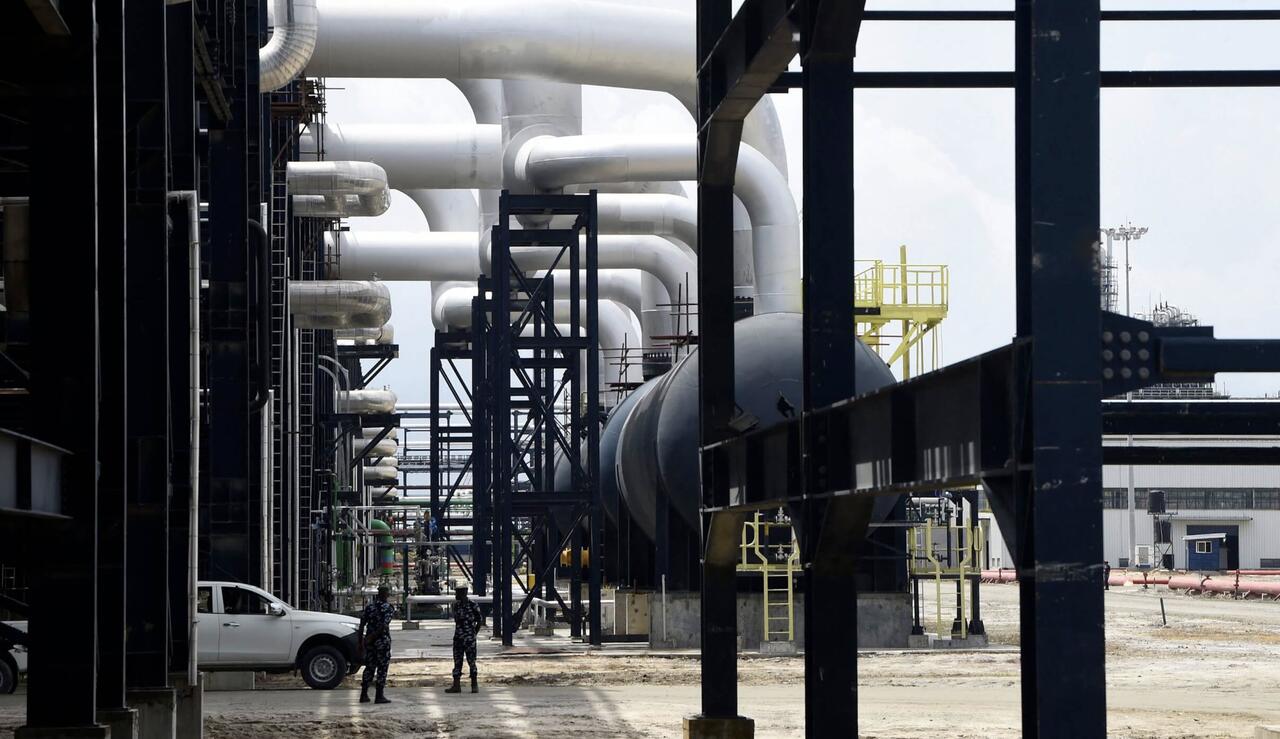
In November 2025, Aliko Dangote, Africa’s richest businessman, signed a $1 billion development agreement with Zimbabwe’s president, Emmerson Mnangagwa, to build a 1,300-mile fuel pipeline stretching from Walvis Bay in Namibia through Botswana to Bulawayo in Zimbabwe. Teams are working on routing, logistics, land procurement, and regulatory details.
The project is Zimbabwe’s government policy, and the pipeline has become the country’s moral imperative. To understand why, we must look at the catastrophe of the status quo.
Few modern economies have collapsed as swiftly as Zimbabwe’s did under the government of the late Robert Mugabe, which was known for corruption and disastrous land reforms. A nation that once fed Southern Africa became a cautionary tale.
Although Mugabe was forced from office in 2017, Zimbabwe still faces 18-hour daily power cuts, which cause the country to lose more than 6% of gross domestic product every year, according to World Bank estimates. Removing that economic drag would create space for actual growth.
Green activists want the government to rely on the Kariba Dam, a hydroelectric facility that environmentalists consider “renewable.” But nature is not reliable. An El Niño-induced drought has reduced Kariba to a pitiful 9% capacity. The dam is drying up, and with it, the economic future of a nation.
More promising is the pipeline. Its route—from the Atlantic coast of Namibia, through the stable democracy of Botswana, into Zimbabwe—creates a new strategic energy corridor for Southern Africa. It integrates the 10 economies of the Southern African Development Community in a way that decades of political summits failed to do.
There is an irony in the geopolitics of this pipeline deal. For years, the West has warned Africa of the dangers of “Chinese debt traps,” while offering no viable alternative for energy infrastructure. Now, a pipeline is creating Pan-African commercial cooperation that bypasses both Western climate lectures and Beijing’s loans.
Estimates of the project’s job opportunities range from 50,000 to 100,000 positions across the project’s construction phase and operational lifetime. In nations with unemployment exceeding 20%, these are transformative numbers.
The Dagonte pipeline offers attractive economics: Foreign contractors, anticipating the expenses of regulatory compliance and “green” tape, would likely quote tens of billions for a similar corridor. Dangote is delivering the pipeline, a cement plant, a fertilizer factory, and power infrastructure for a fraction of that cost.
The project will make Dangote’s refinery in Lagos one of the world’s largest single-site refining operations, growing from a current 650,000 barrels per day (bpd) to 1.4 million bpd by 2028.
These developments draw a new energy map in the region and threaten external interests. China and the West compete for influence over African resources. A regional fuel artery weakens their leverage. They cannot dictate terms to countries that supply their own energy.
For Zimbabwe, the implications are immediate. The economy pays punishing premiums for imported diesel delivered by truck. Every liter moves across multiple borders, each with tariffs and delays. Being landlocked leaves Zimbabwe exposed. The pipeline breaks that pattern. Once fuel flows from Walvis Bay to Bulawayo and onward to Zimbabwe’s capital at Harare, costs fall, and the manufacturing sector finally stops running on expensive fuel for running electricity generators.
This sends a terrifying signal to the climate czars that the developing world is waking up. Leaders like President Mnangagwa and industrialists like Dangote are realizing that the “Green Energy Transition” is a luxury good—likely a bogus one—they cannot afford. They are choosing the path of India and China—rapid industrialization fueled by whatever works. And what works, undeniably at this time, are fossil fuels.
Tyler Durden
Sun, 01/11/2026 – 07:00