
Germany's Family Businesses Warn: Taxes, Energy Costs, And Bureaucracy Are Killing Competitiveness
Submitted by Thomas Kolbe
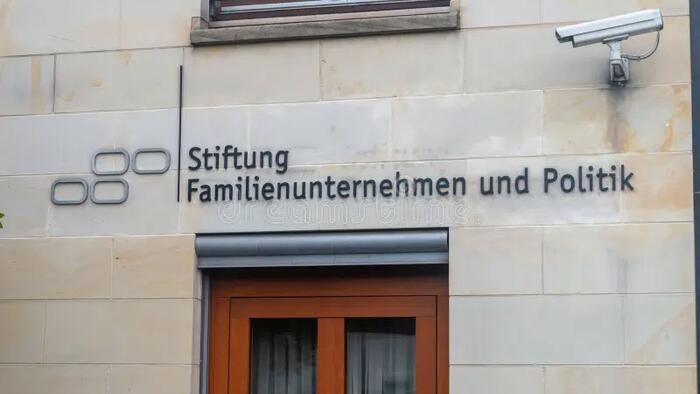
At the turn of the year, the Foundation for Family Businesses, together with the ifo Institute, presented a corporate survey on tax policy and location attractiveness. The result is unequivocal: Germany is too expensive and no longer competitive as a business location.
There is nothing new under the sun. In their year-end Annual Monitor, the Foundation for Family Businesses and the ifo Institute once again went straight to the heart of the matter. A total of 1,705 companies across all sectors and size categories were surveyed on their assessment of current tax policy and Germany’s attractiveness as a business location. The evaluation of this corporate panel—1,358 of which were traditional family-owned businesses—turned out to be devastating, as expected.
Overburdened Labor Factor
More than 80 percent of companies perceive the overall tax and contribution burden—particularly in the area of personnel costs, i.e., wage taxes and social security contributions—as far too high. The heavy burden on the employee side is especially criticized by smaller family-owned businesses. It has become increasingly difficult to grant wage increases when the fiscal authorities take the lion’s share and key performers are bled ever more heavily with each pay raise due to the continuous increase in social security contribution ceilings.
This assessment is shared by Professor Rainer Kirchdörfer, member of the Foundation’s executive board, who comments on the study:
“Our new Annual Monitor shows just how much employers and employees are pulling in the same direction. It is precisely the high taxes on labor that paralyze both sides and drain the joy from performance. High-tax Germany has also lost ground here.”
Two-thirds of surveyed executives complain about excessive income tax rates. Income tax is particularly relevant for partnerships—and by international standards it is clearly too high. A recurring grievance is also the complexity of Germany’s tax system. The familiar quip holds that roughly two-thirds of global tax law literature originates in the Federal Republic. Even if exaggerated, the message is clear: Germany is a bureaucrat’s paradise.
Currently, 5.4 million people work in the public sector—around half a million more than five years ago. This despite technological progress, artificial intelligence, and increasing automation of internal processes.
The Bureaucracy Reduction Classic
A tangible reduction in bureaucracy, including tax law, has been overdue for decades. Yet no federal government dares to tackle this hot potato. German bureaucracy has grown too powerful, evolving at all levels into a state within the state. At the same time, policymakers view the public sector as a kind of buffer for a labor market that has slowly but steadily tipped.
As a reminder: over the past three years, German companies have been forced to create 325,000 additional jobs merely to cope with the ever-expanding bureaucratic workload. The state is effectively outsourcing its ballooning documentation, archiving, and compliance requirements to the private sector.
Ranked second and third among entrepreneurs’ main points of criticism are rising local business taxes (Gewerbesteuer) and energy-related levies. Both factors are likely to play a significant role in 2026. Municipal budgets, paralyzed by a cumulative deficit of €35 billion last year, are virtually screaming for sharp increases in local business tax rates.
This threatens to trigger a tax-driven recessionary spiral initiated by local governments seeking short-term relief—particularly in regions hard hit by the industrial downturn, such as the automotive hubs of Stuttgart, Ingolstadt, and Wolfsburg.
Additional Pressure from Energy Levies
As of January 1, 2026, under the Fuel Emissions Trading Act (BEHG), the CO₂ price corridor will rise to between €55 and €65 per ton. This represents another substantial erosion of Germany’s economic substance, as it struggles to keep energy-intensive production in the country amid intensifying competition with China and the United States.
Entrepreneurs’ demands are clear: a reduction in the electricity tax is long overdue as a first step toward restoring the competitiveness of German industry. The abolition of the solidarity surcharge, alongside an accelerated reduction in corporate taxes, also ranks high on the business community’s wish list for the coming year.
Germany is too expensive as a business location by OECD standards. Since 2018, this has also become evident in overall economic productivity, which has stagnated and even declined slightly in recent quarters.
Valid Criticism, But the Root Problem Remains Untouched
There is no question that entrepreneurs are correct in their assessment of fiscal overburdening on companies and private households. The German state has expanded excessively and—given steadily rising public debt—is increasingly living at the expense of future generations.
What is striking, however, is what the study fails to address. Neither the billion-euro follow-up costs of migration into Germany’s welfare system nor the fiscal and real-economic consequences of centrally planned climate policy are included in the assessment. Yet both factors significantly contribute to rising tax burdens and have sustainably weakened Germany’s industrial base.
What has materialized in energy costs—burdens sometimes three times higher than those in competing locations such as France or the United States—must become the subject of a broad public debate if a return to rational economic policy is ever to be possible.
Under the current federal government led by Chancellor Friedrich Merz, this appears fundamentally out of reach.
If not Germany’s economic middle class, who should initiate such a debate openly and courageously? We are still waiting for the icebreaker capable of overcoming the dogma of the alleged lack of alternatives in climate policy in a practical, rational, and unresentful manner. And it remains all too easy for policymakers, operating in an entrenched mode of accelerated debt accumulation, to align incentive structures and a lavishly funded subsidy machine in such a way that any critical voice from the business sector is ultimately silenced.
In the end, the study delivers a rapid situational assessment from which the familiar criticism emerges—criticism that, at all costs, seeks to avoid a collision with an ideologically hardened climate-socialist policy.
Tyler Durden
Sat, 01/03/2026 – 07:00