
Feds Fund Online Game 'Bad Vaxx' To 'Psychologically Inoculate' Vaccine Resistance
U.S. taxpayer funds are being used by federal health agencies to develop and test online psychological games designed to condition how people—especially younger audiences—interpret and respond to vaccine skepticism.
An August Nature Scientific Reports study reveals that the project was funded by the Centers for Disease Control and Prevention (CDC) under the U.S. Department of Health and Human Services, through a CDC award administered by the American Psychological Association.
The paper states that the funding totaled “$2,000,000 with 100% funded by CDC/HHS.”
The grant supporting the project is titled “COVID—INOCULATING AGAINST VACCINE MISINFORMATION,” award number 6NU87PS004366-03–02.
That award has already handed out over $4.3 million in taxpayer funds since its activation in 2018.
The project language mirrors the study’s conceptual framework: dissent is treated as exposure to a pathogen, and resistance to dissent is treated as immunity.
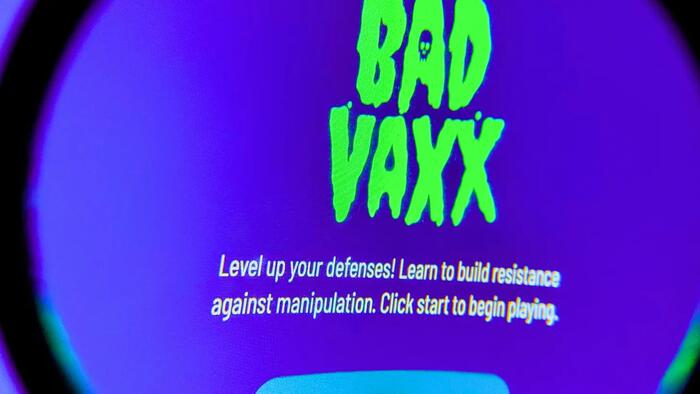
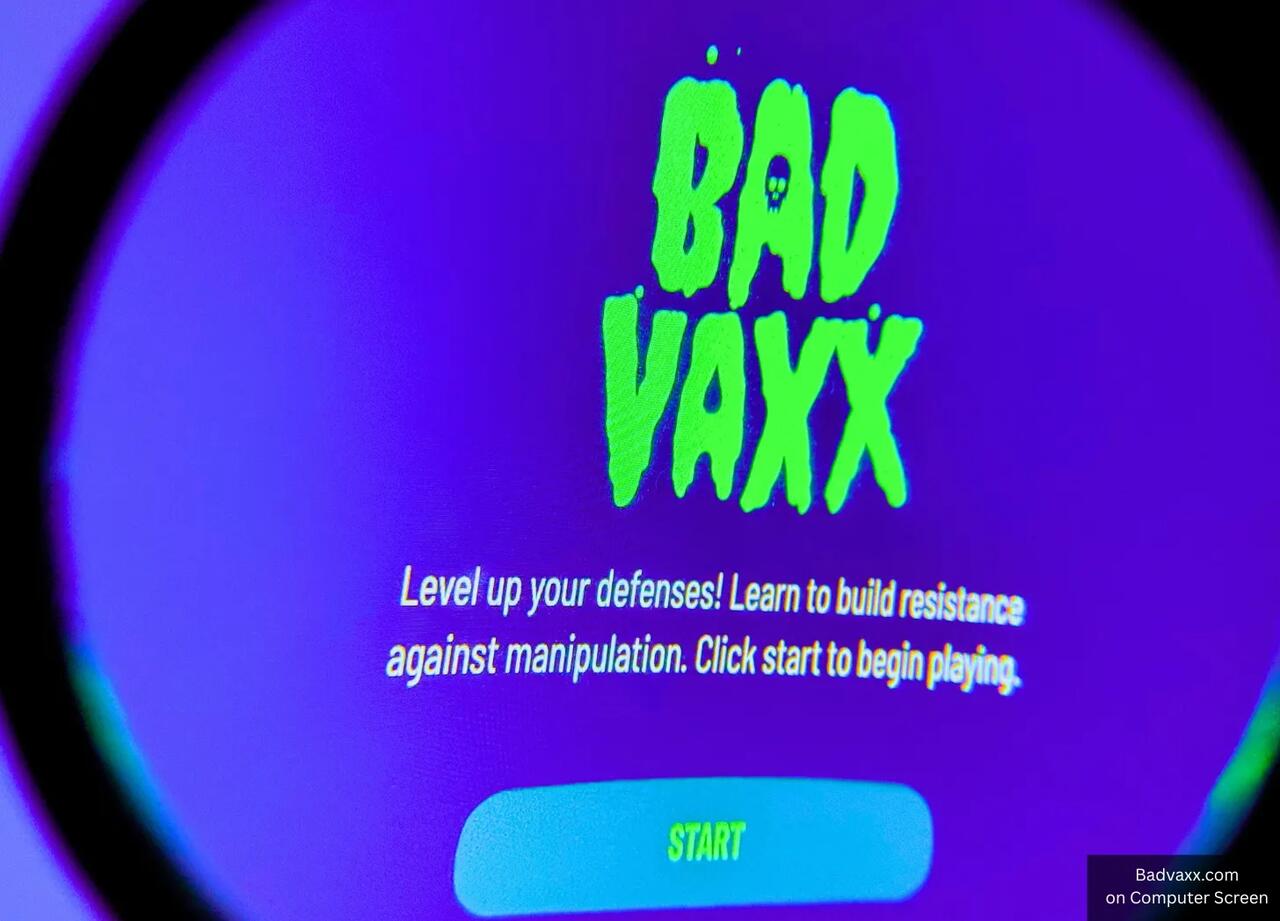
The government-funded study centers on the creation and evaluation of an online game called Bad Vaxx.
According to the authors, the purpose of the game is not to examine disputed vaccine claims or to compare competing evidence, but to reduce what they define as “vaccine misinformation” by shaping how players cognitively process vaccine-critical content.
This is despite the CDC’s own VAERS data confirming over 2.7 million injuries, hospitalizations, and deaths linked to vaccines since 1990.
The study authors explain their premise at the outset:
“Vaccine misinformation endangers public health by contributing to reduced vaccine uptake.”
From this premise, the study moves directly to intervention design.
“We developed a short online game to reduce people’s susceptibility to vaccine misinformation.”
The paper frames this approach as a form of psychological prevention, borrowing language from immunology rather than education or debate.
“Psychological inoculation posits that exposure to a weakened form of a deceptive attack… protects against future exposure to persuasive misinformation.”
The Bad Vaxx game operationalizes this concept by training players to recognize four specific “manipulation techniques”: what it refers to as emotional storytelling, fake expertise, the naturalistic fallacy, and conspiracy theories.
These techniques are treated as characteristic of vaccine misinformation as a category.
“The game trains people to spot four manipulation techniques, which previous studies have identified as being commonly used in the area of vaccine misinformation.”
The study does not include a corresponding examination of whether similar persuasive techniques may be used in vaccine-promoting messaging, government communications, or pharmaceutical advertising.
Ironically, the Bad Vaxx project itself relies on the same persuasive architecture it claims to neutralize—emotional framing, authority cues, and repetition—embedded in a gamified format designed to shape intuition rather than invite scrutiny.
The classification of “vaccine misinformation” is established in advance and applied only to information critical of injectable pharmaceutical products.
Throughout the paper, vaccine skepticism is framed as a behavioral and social risk rather than as a possible response to uncertainty, evolving evidence, or institutional error.
The taxpayer-funded authors write:
“Susceptibility to misinformation about COVID-19 predicts lower compliance with public health regulations and lower willingness to get vaccinated.”
The choice of a game as the delivery mechanism is emphasized as a strength of the intervention.
The authors repeatedly describe the format as “entertaining,” “immers[ive],” and scalable, highlighting its ability to shape intuition rather than deliberation.
“A practical, entertaining intervention in the form of an online game can induce broad-scale resilience against manipulation techniques commonly used to spread false and misleading information about vaccines.”
Games function by rewarding correct pattern recognition, reinforcing desired responses, and reducing analytical friction.
The study’s outcome measures reflect this design: discernment scores, confidence ratings, and willingness to share content, rather than independent evaluation of claims or evidence comparison.
The researchers also emphasize the potential reach of such interventions.
“The Bad Vaxx game has the potential for adoption at scale.”
This matters because the funding source is not an academic foundation with no policy stake.
The CDC is the primary federal agency responsible for vaccine schedules, promotion, and uptake.
Yet the study does not address how this institutional role shapes the definition of misinformation used in the intervention, nor does it acknowledge the conflict inherent in a public health authority funding psychological tools aimed at managing disagreement with its own policies.
The dystopian nature of the project emerges from the structure itself: state funding, psychological conditioning, asymmetric definitions, and a delivery system designed to bypass debate in favor of intuition.
What the paper documents, in concrete terms, is the use of taxpayer funds to develop and validate a behavioral intervention—delivered through a medium optimized for psychological conditioning—that trains users to reflexively distrust a predefined category of speech, while exempting vaccine-promoting institutions from equivalent scrutiny.
Tyler Durden
Mon, 12/29/2025 – 13:40