
As AI Booms, US Ignores One Threat That Could Turn Off Everything
Authored by Richard Porter via RealClearPolitics.com,
We are now well past dawn in the age of artificial intelligence: According to a recent survey by Pew Research Center 62% of respondents say they interact with AI a least several times a week. Nearly every company in the U.S. is now urgently evaluating the ways in which AI can be deployed to lower costs, improve products and services, and ultimately to increase profits. Some, such as Elon Musk, are predicting AI and robots will generate such abundance that in 10 to 20 years, work will become optional and money irrelevant.
Hundreds of billions of dollars are being poured into building new data centers to house the computers to meet expected demand as AI becomes ubiquitous, not just in the U.S., but around the world. Some see a 25% growth in U.S. electricity demand over the next five years as these data centers come online, and predict consumer electricity prices will go at least 40% higher, too.
Our economy, our money, our livelihoods, our lives are increasingly virtual and online; our dependence on electricity and access to data processing cannot be overstated. Just over 140 years since the commercialization of electricity, just 75 years after the first commercial computer was introduced, and just over 30 years since the Internet was opened to the public, human civilization in the U.S. and much of the world depends on the continuous flow of electrons through circuits.
While there’s been much handwringing over the risk that AI will take over the world, as in “The Terminator” series of movies (Google’s AI estimates there have been hundreds of thousands or more articles on this topic), perhaps we should focus more attention on the opposite risk.
What if AI, the computers, indeed all electricity and electric circuits are suddenly turned off? What happens if the continuous flow of electrons through circuits upon which our civilization increasingly depends just – ends?
How could this happen? Wires and circuits are designed to carry a certain voltage and amperage: Volts measure pressure on electrons and amps measure the volume or flow of electrons. When volts or amps are too high for the wire or circuit, it overheats, melts, or catches fire. So, for example, when lightning strikes an electronic device, the wires in the device act as antennae and pick up the electric charge from the lightning, which causes the voltage on the wire to surge millions of times higher than typical voltage.
Lightning rods, invented by Ben Franklin in 1753, and Faraday cages, invented by Michael Faraday in 1836, have long been used to protect structures and electronic devices from the regularly and naturally occurring risk of lightning and ambient electromagnetic waves from the sun or other sources, by redirecting the electricity caused by these phenomenon.
So, how might the entire flow of electricity upon which our civilization depends ever just be turned off? There are two types of relatively low-probability events that could cause a massive electromagnetic pulse directing millions of volts onto wires, thereby destroying unprotected electronic devices in the U.S.
-
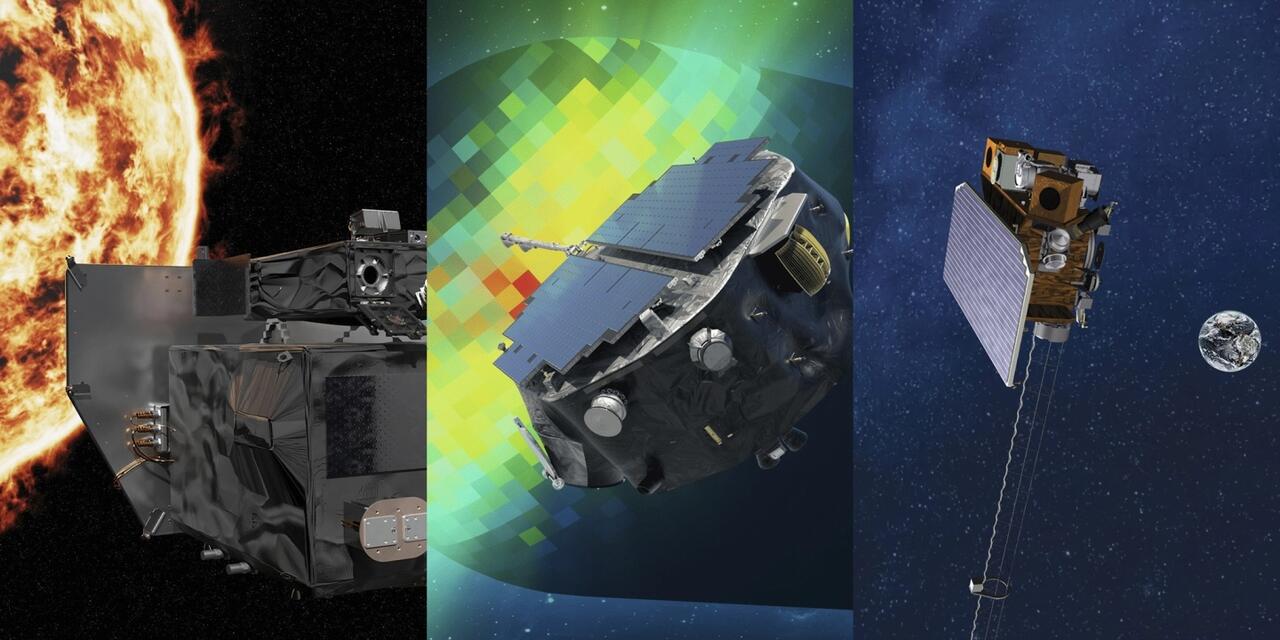
The first is a massive solar storm called a “Carrington event” after the astronomer who observed the largest geomagnetic storm ever recorded in 1859 – a storm hundreds of times larger than “typical” solar storms – that destroyed telegraph systems in Britain and the U.S.
-
The second is the creation of electromagnetic pulses by detonating a nuclear device high in the atmosphere above the U.S., called a HEMP, or high-altitude electromagnetic pulse.
While no one knows for sure the odds of either event occurring in the next 10 years, some have put the odds for each at 10-12%. In any event, the risk is non-trivial and the consequences to life in the United States of either event continue to grow every day as our reliance on AI, computers, robots, and the electricity that makes it all possible, grows.
Our government formed a commission to assess this risk in 2001, which reported in 2008 that 90% of Americans would likely be dead 6 months after a HEMP attack on the U.S. – because our modern civilization operates as a system of systems, but all of the systems require electricity and electric components to function.
Americans are even more dependent on electricity today than we were 17 years ago, and our dependence on electricity will grow even deeper as we integrate AI into our lives.
So, as we depend more on electricity and AI, the policy question is: Are we actually implementing strategies for mitigating EMP risk, as the expected cost of this known risk is massive and continues to grow?
Note in this regard that triggering a HEMP is actually the easiest type of nuclear attack a rogue state or actor could launch against us – because a missile only has to go up and explode over the U.S. and does not have to be targeted back to a particular location on earth. It’s also relatively “clean” in that radiation fallout to the ground is lower the higher the bomb is detonated. Some scholars believe that HEMP weapons are central to China’s nuclear and cyber strategy against the U.S.
It’s uncomfortable to consider this risk, and it’s human nature to sometimes ignore small risks with major consequences, but a rational policymaker should increase investments to mitigate this risk as the expected cost of the risk increases.
Are we doing this? How many of the new, massive data centers are incorporating protections against EMP in their design and construction? As utilities build new power plants and upgrade the aging, unprotected grid, are they planning and designing to mitigate EMP risk? And what of our transportation equipment and infrastructure?
Ubiquitous, reliable, low-cost electric energy has been our greatest strength, but it’s also become our Achilles heel in the nuclear age. We know this to be true.
Last March, President Trump ordered the creation of a National Resilience Strategy by July and a National Critical Infrastructure Policy by October to address risks such as these, but neither the follow-up strategy nor the policy contemplated by the order appears to have been published. While empowering states and localities to deal with these risks may be efficient, it’s unclear whether states are seriously taking on this task either.
In Aesop’s fable of the wild boar and the fox, the fox questions why the boar sharpens its tusks, and the boar replies it would be foolish not to get ready when you can for what comes. I fear we are not giving this well-known, truly-existential, but oft-ignored risk the attention, planning, oversight, and investment it deserves as electric infrastructure spending soars in pursuit of AI.
Views expressed in this article are opinions of the author and do not necessarily reflect the views of ZeroHedge.
Tyler Durden
Fri, 12/05/2025 – 07:20